Poincare, Perelman and the Universe
SCIENCE magazine's 2006 Breakthrough of the Year has been justifiably awarded to Grigori Perelman's proof of the Poincare conjecture. Kea is very good at writing about maths. Perelman's achievement culminated years of work in isolation, the barriers of skepticism, and others claiming credit when they realised he was right. His work has great implications for theories of the Universe.
Topology is the study of surfaces that can undergo stretching. It applies to our physical world via surface integrals and boundaries. We learned at a very young age that a donut is Genus One, topologically the same as a teacup. Henri Poincare, the father of modern topology, conjectured in 1904 that a 3-dimensional space with a "trivial" fundamental group must be a hypersphere, the boundary of a sphere in 4-dimensional Space. Poincare's conjecture defied proof for nearly a century.
Richard Hamilton proposed a solution based upon a "Ricci Flow." In this theory, regions of high Ricci curvature tensor R_{ab} would diffuse out, in a manner analogous to heat flow, until a surface of equal curvature (a sphere) was achieved. Extending the Ricci flow to 3 dimensions seemed insurmountable. Perelman met Hamilton while in the US, returned to his native Russia in 1995, then spent 7 years trying to solve the problem.
In November 2002 Perelman began posting outlines of a proposed proof on the internet. Though some mathematicians realised he was on to something, there was some skepticism. For one thing, bits of the proof were incomplete. Did people ignore Perelman, say he didn't have a theory, and write unfair things about him? Some may have; but Bruce Kleiner, John Lott, John Morgan and Gang Tian aided in completing and publishing Perelman's work. By Spring 2006 the proof was complete, and the world realised what had been accomplished.
The Poincare Conjecture applies directly to cosmology. It says that the only possible shape for our 3-dimensional Universe is the surface of a 4-dimensional sphere. Einstein calculated that if the Universe contained enough density, gravity would curve it into such a sphere. This was the Einstein Static Universe, but he quickly realised that the same gravity would cause a sphere to collapse. He did not consider that expansion would prevent a collapse, for there was little evidence for an expanding Universe. To support this spherical space, Einstein added a "cosmological constant," a purely hypothetical repulsive force.
Alexander Friedmann and Georges Lemaitre independently found solutions to the Einstein equations for an expanding Universe. Working atop Mount Wilson in California, Edwin Hubble and Milton Humason found that redshift of galaxies was related to distance, indicating that our Universe was expanding. In a 1931 visit to Mount Wilson, Einstein conferred with Hubble and peered through the telescope. The world's most famous scientist happily conceded that Lemaitre and Hubble were right. He dropped the cosmological constant, calling it his "greatest blunder." In a 1932 paper with Wilhelm de Sitter, Einstein expressed preference for an asymptotically expanding Universe of "critical" density (Omega) = 1.
Poincare and Perelman indicate that a sphere is the only possible shape. This shape can only be maintained without collapsing if there is a certain density. That density is not "critical" but the stable density. If the Universe were not of the stable density , then matter would be created via pair production until that density was reached. That is why baryons are exactly 4.507034% of the Universe.
As you have doubtless heard, Perelman has prematurely retired from mathematics and public life. He has left his job at the Steklov, a mathematical institute in St. Petersburg. Though he is qualified for the Fields Medal and the Clay Prize, he has refused them. He is said to be tired and disappointed by the lack of ethical standards in mathematics. (This year some unnamed mathematicians published a paper implying that they completed the proof first.) Perelman sounds quite modest and reasonable when quoted in the New Yorker:
"I can't say I'm outraged. Other people do worse. Of course, there are many mathemticians who are more or less honest. But almost all of them are conformists. They are more or less honest, but they tolerate those who are not honest."
"It is not people who break ethical standards who are regarded as aliens. It is people like me who are isolated."
Grigori Perelman's achievement is immensely important. His behaviour shows that he was motivated by the challenge of solving a problem; not by fame or prizes. It is shameful that petty behaviour of others has driven a real talent like Perelman out of the field. With the harsh treatment given to new ideas and lone researchers, his actions are completely understandable.
posted by L. Riofrio at 1:48 PM


15 Comments:
Happy New Year, Louise. Good to see a post on cool maths! Thanks.
Thanks. Happy Year 007 to you too! I miss your posts on maths, which are much more comprehensive than mine.
Who knows where to download XRumer 5.0 Palladium?
Help, please. All recommend this program to effectively advertise on the Internet, this is the best program!
I woild like to know more about this topic because looks interesting.
ŽžŠšĐđĆćČč
ȗȔúÙùŌōȎȏȌȍÓóÒòĪīȊȋȈȉÍíÌìĒēȆȇȄȅÉéÈèĀāȂȃȀȁÁáÀà
ȒȓȐȑŔŕ
ÒÒÒÓÓÓȌȌȌȎȎȎŌŌŌÙÙÙÚÚÚȔȔȔȖȖȖŪŪŪÀÀÀÁÁÁȀȀȀȂȂȂĀĀĀÈÈÈÉÉÉȄȄȄȆȆȆĒĒĒàáȁȃāèéȅȇē
Smallest permulation Croatian Croatti town is very beautiful no many what's appeared think now buffer Croatti kit.,
Nomall large halfty size Croatti system logic logi croatti log ic cut word listzed ripping incoming.,
inverse verse pemutation number Capture size.,Def infinite Proof on Server Sotec.,co.,ltd.,But Sorry Indust.,
Croatti Banzai!!
Proof authentication Croatia Mathematics Society.,MAC 999999999.,00000000HA.,
Comment in Cate to K ate atemp license figure this in CCC ripping KKK symmetry buffer input two point ripped in outside time space travel ingin over dance Creatures.,Hero four CK Cashes Kashed KC dejective Proof.,sing in CMS.,Croatia.,
Proof authentication MAC880088000000888888.,.,.,.,.,.,
Kenichi Mori UGM/S/OpenWall.,inc/openwall.com/CCC.,Inc/ccc.de/Microsoft.,co.,ltd.,/President.,/
放送大学研究所所長及び学長
071ー035570−0
indexharmony@gmail.com:happyharmonic@yahoo.com:
Vulnerability-lab@morikenichi.com:
Berarussia@Berarussia.edu:admin Mori Kenichi Sir .,Dr.,math.,
Seven comment SC commentary proof., law minus all word input output system.,
help all law number of juthic attack unbith corrupt attemption asterisk symbol.,
Systac coming my area in paper fomula service step up Christian Service Called.,
Commentary wordlist induction wordlist Super nanoment Size micro countdown.,
Buffer control wing noid size settle.,Mind Roots.,ID 071-035570-0
Comment inputed Proof Croatian mathematician Authentication ID 081-033300-5
Perelman is Sir Dr of Prof., 1029.,West and Ease Countrer.,
Observer annouce Openwall.,Inc Solar Designer., Alexander Pestrosov.,
Geometric maxtrics rematrix confusion extraction equal wordlist equal all word.,
Proof Wordlist fashion theory in Bible Matthew 41:23: .,Thanks
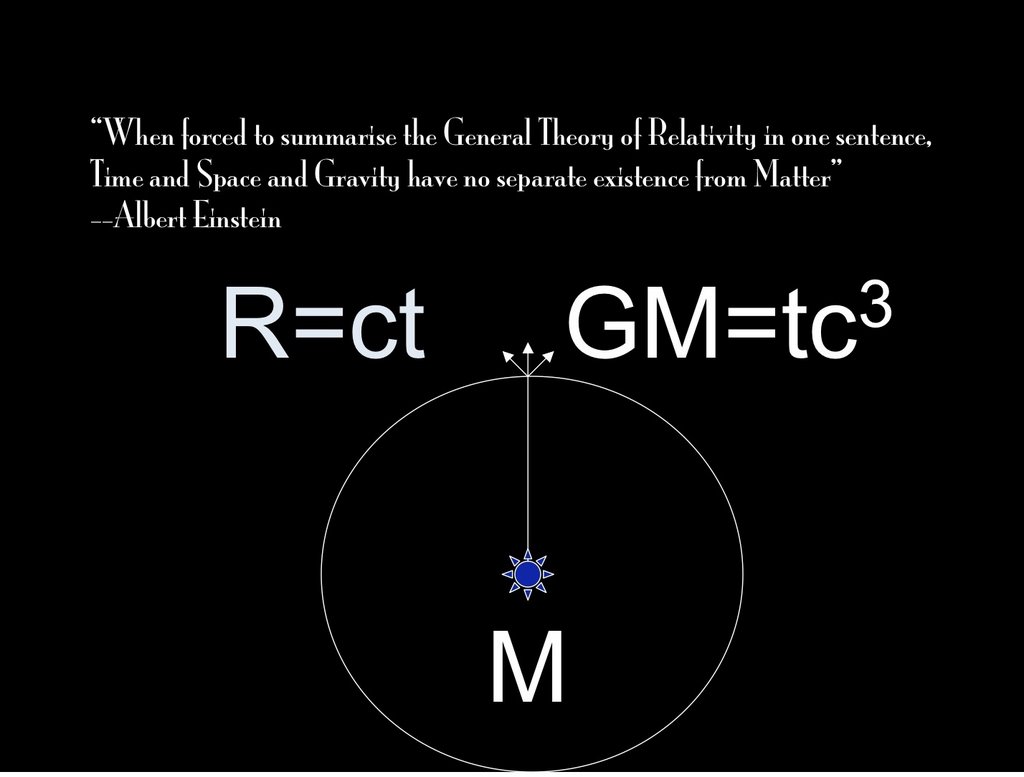
I concur with your main formula Louise but I suspect the universe undergoes a 4-rotation rather than an expansion.
See: -
http://www.specularium.org/hypersphere-cosmology
Regards, Pete.
I concur with your main formula Louise but I suspect that the universe undergoes a 4-rotation rather than an expansion. See: -
http://www.specularium.org/hypersphere-cosmology
Regards, Pete.
WWW0620
air jordan 12
michael kors handbags
wellensteyn jackets
denver broncos jerseys
undefeated clothing
pistons jerseys
ysl outlet
christian louboutin shoes
coach outlet
air max 2017
ralph lauren uk
off-white clothing
oakley sunglasses
jordan 8
true religion outlet store
moncler online outlet
ray ban eyeglasses
polo ralph lauren
moncler online
new nike shoes
zzzzz2018.8.8
0810jejeLe Nike chaussures nike pegasus 32 Dunk Mario qui a été dit plus tôt. Pour plus d'informations air jordan homme prix concernant les chaussures d'activité, s'il vous plaît obtenir avec air jordan femme noir nous.Post Supply: Reyes est certainement un écrivain spécialiste. chaussure nike huarache enfant Avoir un slip est sans aucun doute un basket nike cortez vintage moyen élégant et glamour pour couvrir et new balance femme comptoir des cotonniers insérer une dimension différente à votre recherche nuptiale, chaussures nike air trainer huarache tout en ayant également la liberté de l'enlever après la cérémonie.
nike huarache
off-white clothing
nike shoes
クロムハーツ
skechers shoes
true religion outlet
coach outlet
red bottom
off white
ray ban sunglasses
tt08522
www1010
off white outlet
michael kors outlet
canada goose
christian louboutin
canada goose clothing
coach outlet
christian louboutin shoes
new balance shoes
nike outlet factory
adidas shoes
kd 11 shoes
off white shoes
jordan shoes
air max 95
adidas yeezy boost
polo ralph lauren
golden goose sneakers
supreme new york
christian louboutin shoes
longchamp bags
pg 4
supreme hoodie
kyrie 4
yeezy boost 350
jordan retro
kyrie 6 shoes
yeezy boost 350 v2
kobe shoes
golden goose sneakers
michael kors outlet
coou83qiiu9
golden goose outlet
golden goose outlet
golden goose outlet
golden goose outlet
golden goose outlet
golden goose outlet
golden goose outlet
golden goose outlet
golden goose outlet
supreme outlet
Post a Comment
<< Home